


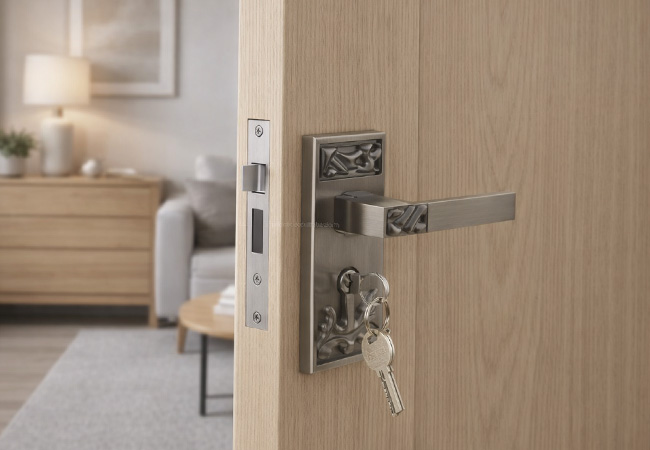
Mortise Lock Body
| Center Distance: | 58 mm Series |
|---|---|
| Type: | Mortise Lock Body |
| Application: | Interior Door |
| Backset: | 40/45 /50mm |
| Color: | Custom |
| MOQ: | 3000 PCS |
| Material: | Custom |
| Sample: | Supported |
| OEM/ODM | Provided |
Where is This Mortise Lock Body Installed?
This mortise lock body is primarily designed for interior door locking systems; its key features include a silent latch bolt and reversible latch orientation.
A mortise lock body with a 58mm center-to-center distance is commonly paired with rose-style handle sets or privacy cylinder handle sets, making it more suitable for bedroom doors, bathroom privacy doors, apartment wooden doors, and hotel room doors. This lock body is primarily designed for interior security and does not require fire-safety certification.
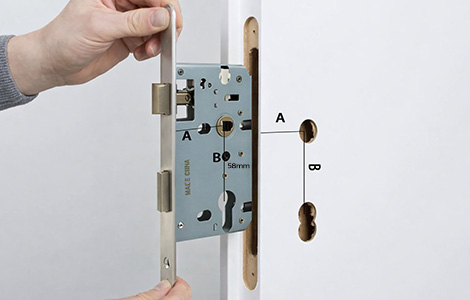
Center Distance 58mm Mortise Lock Body
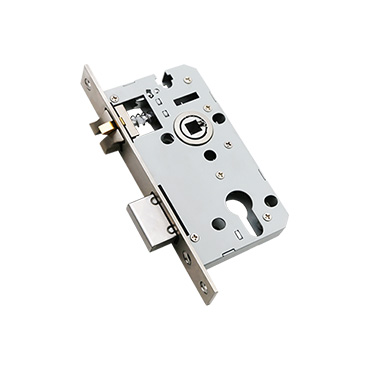
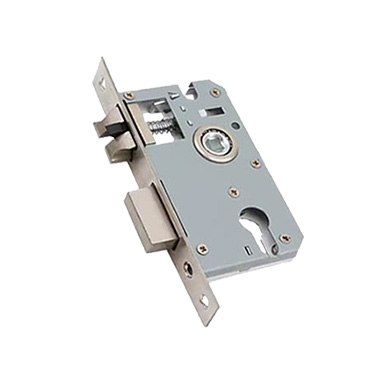
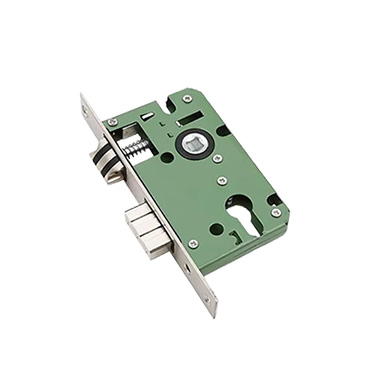
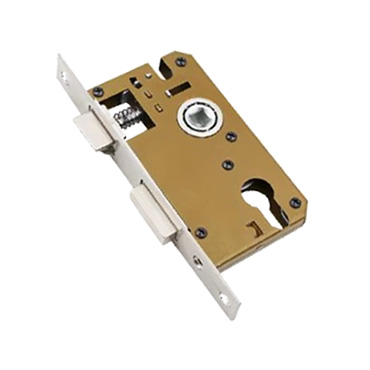
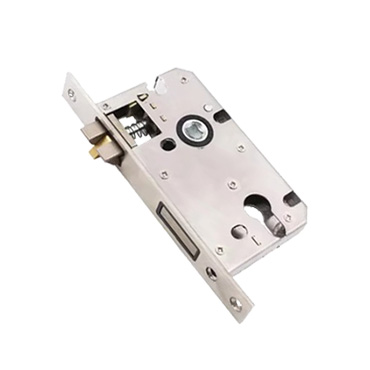
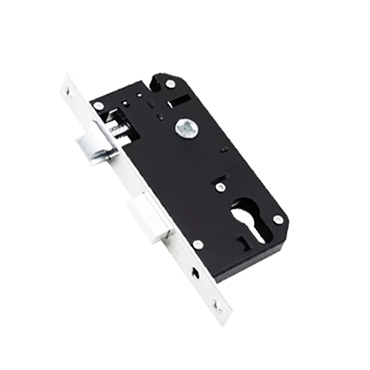
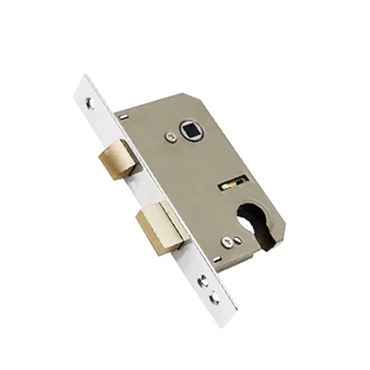
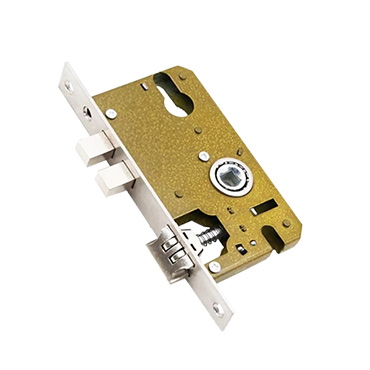
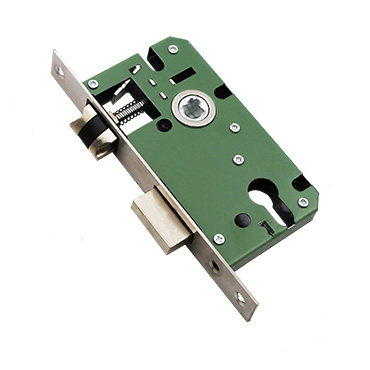
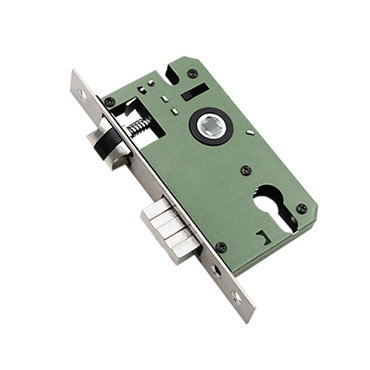
- Key Specifications for Mortise Lock Body with 58mm Center Distance
- Center Distance : 58 mm
- Backset : 40 , 45 mm or 50 mm optional
- Spindle Hole : 8×8 mm or 7×7 mm
- Forend / Faceplate : 3.0 mm , 2.5 mm or 2.0 mm
- Case Material & Thickness : Calvanized steel or iron 1.0 mm ,1.2 mm, 1.3 mm
- Latch : Supports reversible,materials include aluminum alloy, zinc alloy, brass, and iron
- Cylinder Hole: Euro profile cylinder lock
- Door thickness: 35–55 mm
- Surface Treatment : Satin nickel (SN), Matte Black (BLK), Polished Chrome (CP), Antique Brass (AB)..
- Lifespan Test : 100,000–200,000 atch cycles
Why You Should Choose the Same Mortise Lock Factory When Buying Door Handles
If you purchase door handles from a different manufacturer, you must ensure that the lock body specifications—such as the spindle size, center-to-center distance, and backset—are fully compatible. If you select a beautiful handle for an interior door but the spindle dimensions do not match, installation may prove impossible, resulting in significant losses; after all, handle and lock sets from different manufacturers can vary considerably.
A top-tier mortise lock manufacturer should also supply matching door handles; choosing the right manufacturer ensures your business avoids poor outcomes.
Related Products
FAQ:
A mortise lock is a type of mechanical locking mechanism. Unlike surface-mounted locks, it requires a rectangular pocket to be cut into the door itself—hence the name “mortise.” The lock body houses both a latch bolt and a deadbolt; the latch retracts and extends automatically when the handle is operated, while turning the key in the cylinder extends or retracts the deadbolt, thereby locking or unlocking the door.
When replacing an old mortise lock body, ensure the new unit matches the dimensions of the old one—specifically the center-to-center distance, backset, and faceplate size. Follow these steps for a quick replacement:
- Remove External Hardware: Take the door off (if necessary), use a screwdriver to remove the handle screws, and then take out the handles and the lock cylinder.
- Remove the Old Mortise Lock Body: Unscrew the main mounting screws at the top and bottom of the faceplate; be careful not to damage the door’s finish while extracting the lock body.
- Inspect and Clean the Mortise Pocket: Clear out any debris or damaged components from inside the door cavity.
- Install the New Mortise Lock: Slide the new lock body into the cavity, ensuring the latch aligns flush with the door edge. If the screw holes on the faceplate do not align, you will need to drill new holes.
- Secure the Remaining Hardware (Faceplate, Spindle, Cylinder, and Handles): Insert the spindle and lock cylinder; align the cam, install the cylinder, and finally tighten the handle screws.
- Check the Strike Plate: If there is a significant height difference between the old strike plate and the new one, replace it with the matching new part; otherwise, the latch may bind or fail to lock properly.
- Functional Test: Check that the handle operates smoothly, the latch retracts and extends freely, and the key successfully unlocks the door.
You simply need to open the door and look at the metal plate where the latch protrudes; both the latch (with its beveled edge) and the deadbolt extend from this same plate, which is attached to a rectangular lock mechanism embedded inside the door.
Yes, there are still many manufacturers in Jiangsu Province, China, producing mortise locks, and they all offer enhanced security protection.
A mortise lock body comprises numerous components, including the lock case, a reversible latch, a deadbolt (or a 3 round dead bolt), a strike plate.
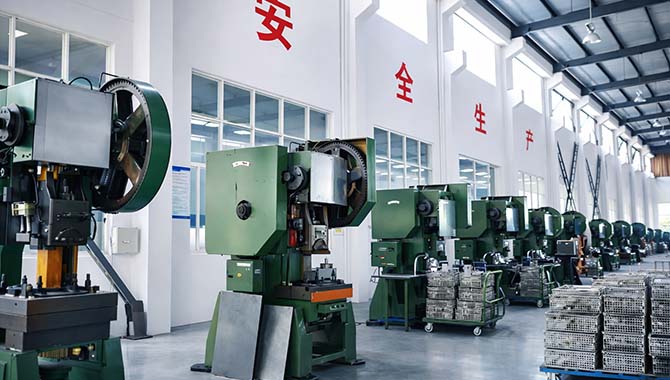
The specifications is different such as backset and center-to-center distance , and the lock case requires a stamping process. It is designed to work with a separate cylinder and key system.
Furthermore, the components are made from various materials. Mortise locks are inherently more expensive to manufacture, but they offer a longer service life than tubular locks and provide superior security for homes.
Generally speaking, mortise locks are very difficult to compromise because their main components are housed inside the door, making them resistant to external impact—unless the door frame is destroyed or the screws come loose, causing the lock to fall out.
- Lock Case
- Cam (Follower)
- Cylinder Hole
- Forend Corner
- Key
- Latch
- Deadbolt
- 3 Round Dead Bolt
- Strike Plate